
The Indian Premier League (IPL) is one of the most popular and lucrative cricket leagues worldwide, drawing millions of fans and bettors. Toss predictions have become a common and trending topic in IPL cricket. However, this excitement has also attracted fraudsters who exploit fans by promising guaranteed toss predictions.
These scams are widespread across social media platforms, websites, and messaging apps like Telegram, where scammers trick people into paying for fake or false toss predictions.
This article uncovers the reality behind IPL toss prediction scams, reveals the tactics scammers use, and offers valuable tips on how to protect yourself from falling victim to these frauds.
The Appeal Of Toss Predictions
The toss plays a crucial role in cricket, influencing team strategies and match outcomes. In high-stakes tournaments like the IPL, teams often prefer batting or bowling first based on pitch conditions, which can significantly impact the match’s result.
Given this, many betting enthusiasts seek to predict the toss outcome, hoping to gain an advantage in betting markets. While tosses are purely luck-based, fraudsters claim to have insider knowledge or sophisticated AI-driven prediction models that guarantee accurate toss predictions, leading unsuspecting fans and bettors into their deceptive schemes.
Common IPL Toss Prediction Scams
Scammers operate in various ways, leveraging different platforms to target people. Here are some of the most common scams related to IPL toss predictions:
1. Fake Prediction Websites
Numerous websites claim to provide accurate toss predictions, often requiring users to pay a fee for access. These websites use professional-looking designs, fake testimonials, and manipulated statistics to appear credible. Some key tactics include:
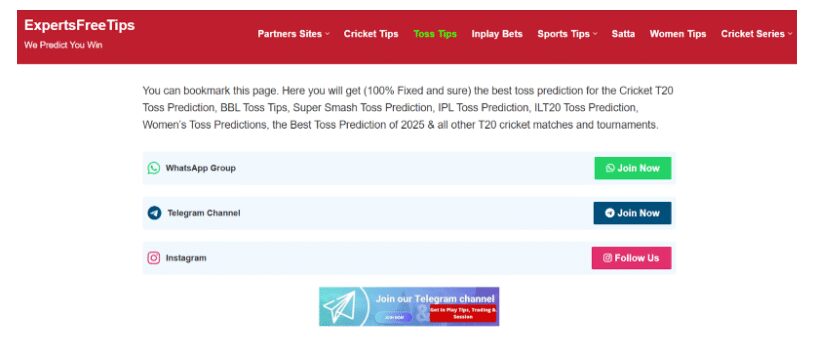
- False Success Rates: Fraudsters claim a 90-100% success rate in predicting tosses, even though it is impossible to predict them with certainty.
- Paid Memberships: These sites often offer VIP memberships, where users must pay a hefty fee for exclusive toss predictions.
- Fake Testimonials: Testimonials from supposed successful bettors are often fabricated to build trust.
Many victims end up losing money and receiving no predictions or generic, random guesses that fail to deliver.
2. Telegram Toss Prediction Scams
Telegram has become a hotspot for gambling-related frauds, with thousands of channels offering betting tips and toss predictions. Some common scams on Telegram include:
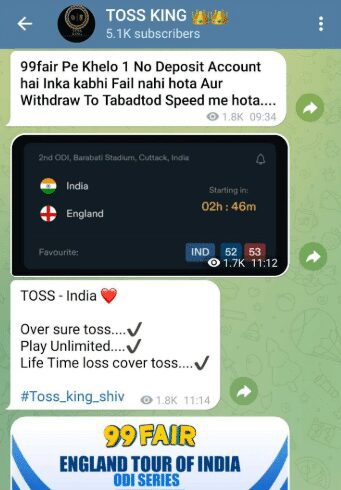
- Paid Toss Predictions: Scammers ask users to pay money in exchange for a “100% toss prediction.” Once paid, they either provide random guesses or block the user.
- VIP Groups: Fraudsters lure users into exclusive VIP groups, promising insider information, only to disappear after collecting payments.
- Manipulated Proof: Scammers often edit images and videos to show past successful predictions, creating an illusion of credibility.
In early 2026, the Cyber Crime Coordination Centre (I4C) confirmed a massive surge in “mule account” ecosystems, where scammers are now using AI-generated deepfake KYC to bypass bank verification, fueling a multi-thousand crore illegal betting economy linked to automated toss-prediction scams.
3. YouTube Fake Toss Prediction Channels
YouTube is another major platform where scammers operate. With the rise of Artificial Intelligence, scammers have upgraded their tactics:
- Fake Prediction Videos: Channels create videos predicting the outcome of IPL tosses, often claiming a 100% accuracy rate. These videos are pre-recorded and edited to appear legitimate.
- AI-Generated “Expert” Avatars: Scammers now use deepfake technology or AI-generated voices of famous commentators to endorse their “secret” toss formulas.
- Clickbait Titles & Thumbnails: Scammers use exaggerated titles like “Guaranteed Toss Prediction – 100% Sure Win” to attract viewers.
- Paid Promotions: Fraudsters promote their Telegram groups or websites through YouTube, funneling victims into their scams.
While the “Molipur village” fake IPL was a landmark case, 2025 saw the rise of “Digital Arrest” scams integrated with toss betting, where fraudsters pose as CBI officers to threaten victims who have lost money on illegal prediction sites, demanding “settlement fees.”
4. Instagram Influencers & Fake Accounts
Instagram has seen a rise in influencers claiming to provide insider toss predictions. Fraudsters use tactics such as:
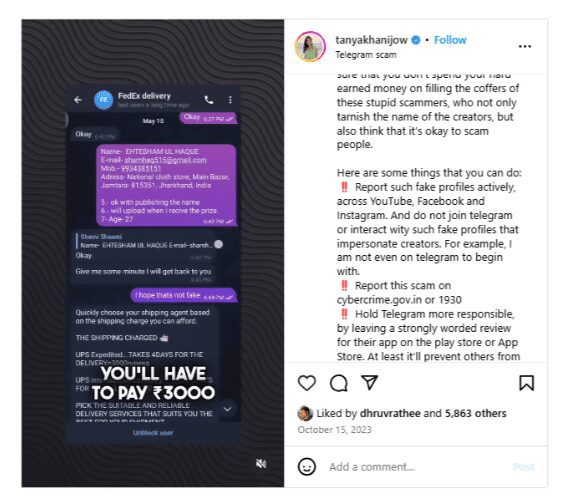
- Paid Promotions by Fake Influencers: Some influencers, looking for quick money, promote scam toss prediction services.
- Fake Expert Accounts: Scammers create fake profiles impersonating real cricket analysts and sports journalists.
- DM Scams: Users receive DMs promising insider to toss information in exchange for money. Once paid, the scammer either disappears or provides random guesses.
Some celebrities and real influencers have warned their followers about impersonators using their names to run betting scams.
Case Studies – Real-Life IPL Scams
Here are some other IPL scams reported over the years:
1. The Fake IPL Tournament Scam
In one of the most shocking incidents, a fake IPL tournament was organized in a Gujarat village to trick Russian bettors. Scammers hired local laborers to act as players, fitted them with IPL team jerseys, and even set up live commentary to make the tournament seem real. The tournament was streamed online, with Russian gamblers placing bets, thinking they were watching real IPL matches.

The tournament was streamed online, with Russian gamblers placing bets, thinking they were watching real IPL matches. The fraud was eventually exposed when the police intervened.
2. MagicWin and Mahadev App Crackdowns
The MagicWin scam has since been identified as a multi-thousand crore operation with links to offshore Pakistani and Dubai-based handlers. In late 2024 and throughout 2025, the Enforcement Directorate (ED) conducted nationwide raids, freezing assets worth over ₹3.55 crore and identifying a network of shell companies used to launder money through crypto assets.
Similarly, the infamous Mahadev Online Book scam remains one of the largest in history. As of late 2025, the Supreme Court has directed agencies to track down “kingpins” who have fled to countries like the British Virgin Islands, with total seized assets in the case now exceeding ₹3,000 crore.
Warning Signs Of IPL Toss Prediction Scams
To protect yourself from falling victim to these scams, watch out for these red flags:
- Guaranteed Predictions: No one can predict a toss outcome with certainty; any service claiming otherwise is a scam.
- Requests for Advance Payments: Scammers often demand money before providing any predictions, then disappear after receiving payment.
- Fake Testimonials & Reviews: Many fraudsters use fake success stories and manipulated screenshots to create a false reputation.
- Use of Fake Experts & Influencers: Always verify if a supposed expert is real or just an impersonator.
- High-Pressure Sales Tactics: Scammers create urgency, pressuring users into making payments quickly without verification.
- AI Buzzwords: Be wary of platforms claiming their predictions are “99% accurate due to AI/Neural Networks”—tosses are purely 50/50 physics.
How To Protect Yourself from IPL Toss Prediction Scams
If you come across an IPL toss prediction service, follow these precautions:
1. Verify Legitimacy
- Search for reviews from independent sources, not just those posted on the scammer’s website or social media.
- Check whether the person or company is registered and legally recognized.
2. Avoid Paying for Toss Predictions
- Toss outcomes are purely random. Paying for predictions is a waste of money.
- Betting should always be done through legal, regulated platforms.
3. Report Scammers
- If you encounter a scam, report it to cybercrime authorities or consumer protection agencies.
- Platforms like Telegram, Instagram, and YouTube allow users to report fraudulent content.
4. Educate Others
- Share information about these scams with friends and family to prevent others from becoming victims.
Related Reads:
Conclusion: Beware Of IPL Toss Prediction Scams
The IPL toss prediction scam industry thrives on misinformation and gullibility. Fraudsters exploit the excitement around cricket betting, using fake websites, social media, and messaging platforms to lure victims. From Telegram and YouTube scams to fake influencers and massive multi-crore app networks, the variety of frauds continues to grow.
While the thrill of predicting IPL outcomes is appealing, it is essential to stay vigilant and avoid falling for these deceptive tactics. Remember: there is no way to predict a coin toss with certainty. Betting responsibly, staying informed, and reporting scams can help protect both your money and your love for the game.
By spreading awareness and staying cautious, we can collectively put an end to these scams and enjoy cricket for what it truly is – a game of skill, passion, and unpredictability.

Leave a Comment