
In a historic moment during the ICC ODI World Cup 2023, Sri Lanka’s Angelo Mathews became the first player in international cricket to be dismissed as ‘Timed Out’. The incident took place in a match against Bangladesh when Mathews failed to take strike due to a broken helmet strap, triggering an appeal from the opposition.
The dismissal sparked intense debate across the cricketing world, as fans and experts weighed in on the spirit versus the law of the game. While rare, such dismissals are part of cricket’s official rulebook.
This article explores the origin of the ‘Timed Out’ rule, its application in domestic and international cricket, and other notable instances that have occurred across formats and tournaments.
What Is a Time Out Wicket?
A “Timed Out” dismissal occurs when the incoming batter is not ready to face the next delivery within a specified time after the previous wicket falls or a batter retires. It is one of the rarest dismissals in cricket.
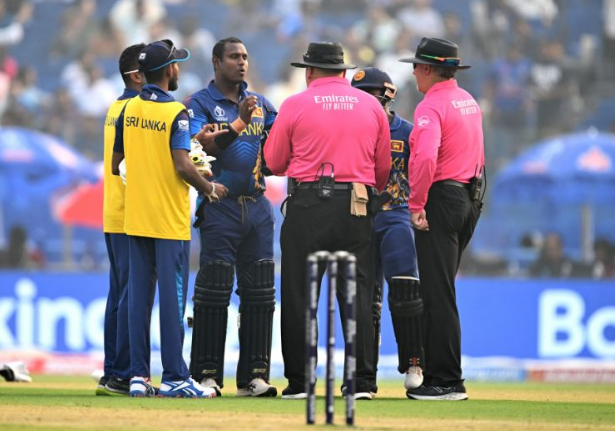
According to Law 40.1.1 of the MCC Laws of Cricket, “After the fall of a wicket or the retirement of a batter, the incoming batter must… be ready within three minutes. If not, the batter will be out, Timed out.” However, ICC tournaments like the World Cup reduce this to two minutes.
This rule ensures the game progresses smoothly, preventing unnecessary delays.
The MCC Rule
The MCC, custodian of cricket laws, introduced the “Timed Out” rule in 1980 to prevent time-wasting during matches. Originally, the rule allowed two minutes for the incoming batter to be ready to face the next delivery.
In the 2000 code revision, this time was extended to three minutes to give batters more leeway without affecting the game’s pace. The rule highlights the importance of keeping the game moving smoothly.

It acts as a penalty against teams causing unnecessary delays, ensuring fair play, and maintaining cricket’s flow.
The Famous ‘Angelo Mathews’ Wicket From ICC ODI World Cup 2023
On November 6, 2023, during a World Cup match at Arun Jaitley Stadium, New Delhi, Angelo Mathews became the first international player dismissed ‘Timed Out.’ He came in to bat after Sadeera Samarawickrama’s dismissal but faced a broken helmet strap.
Mathews requested a replacement helmet, but by the time it arrived, over two minutes had passed since the last wicket fell. Bangladesh captain Shakib Al Hasan appealed, and after umpire discussions, Mathews was declared out without facing a ball.
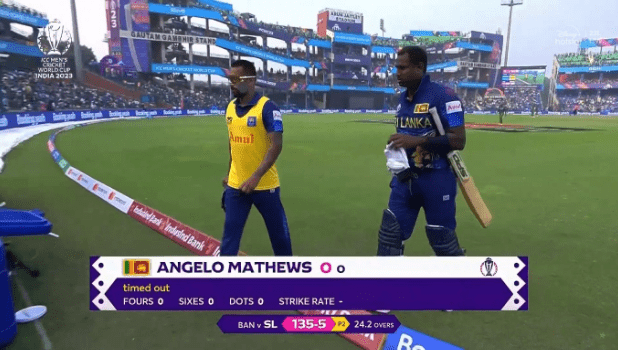
The incident sparked widespread debate on sportsmanship versus strict rule enforcement. Some felt the decision was harsh, arguing for a more flexible approach, while others supported the umpires’ adherence to the rules to maintain fairness and discipline.
Time Out Dismissals In Cricket
“Timed Out” is an extremely rare mode of dismissal in cricket. Before Angelo Mathews’ case, it had never occurred in international cricket.
However, there have been a few instances in domestic matches:
- Andrew Jordaan (1987–88): Playing for Eastern Province in South Africa, Jordaan was the first cricketer to be timed out in a first-class match. He failed to arrive at the ground in time to resume his innings after a rain delay, leading to his dismissal.
- Hemulal Yadav (1997): In an Indian domestic match between Tripura and Orissa, Yadav was declared timed out after not being ready to bat within the stipulated time.
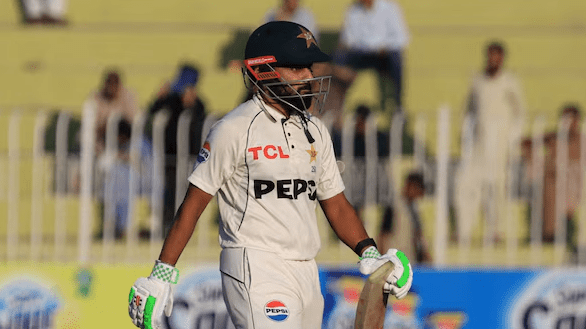
- Saud Shakeel (2025): In the President’s Trophy final in Rawalpindi, Saud Shakeel became the first Pakistani dismissed timed out. The night match, held from 7:30 PM to 2:30 AM for Ramadan, saw Shakeel reportedly fall asleep waiting to bat. When two wickets fell quickly, he wasn’t ready in time. PTV captain Ammad Butt appealed, and the umpires upheld it. This was only the seventh time-out dismissal in first-class cricket history.
These rare instances underscore the importance of players adhering to the game’s timelines and regulations. Being prompt and ready at the crease is crucial—not just for smooth gameplay but to avoid such unusual dismissals.
Related Reads:
- How Many Ways Can a Batter Be Dismissed in Cricket?
- Players Who Got Out For Obstructing The Field
- First Player To Be Given Out By The Third Umpire?
Conclusion: Rare Timed Out Dismissal: Strictly Within Cricket’s Laws!
The “Timed Out” dismissal remains one of cricket’s rarest and most unique rules, highlighting the sport’s attention to discipline and timing. Though seldom seen, it emphasizes the importance of readiness and respect for the game’s flow.
Angelo Mathews’ dismissal brought much-needed awareness to this obscure law, sparking debate on how strictly such rules should be applied versus the game’s spirit. It reminded everyone that cricket balances both tradition and fairness.
As the sport evolves, players and teams must stay alert to the rules while promoting good sportsmanship, ensuring the game is played with both respect and integrity.

Leave a Comment